
Published September 12, 2026
Morning Report — Not Your Typical Medical Newsletter
We get it, you see a lot of medical newsletters, so hear us out. Once a month, we’ll highlight important medical news sprinkled with witty commentary, fun facts, giveaways, and more… because learning should be fun! Subscribe to receive the Morning Report directly.

Good morning! Some of medicine’s mainstays began by solving very different problems. Nitroglycerin blasted rock before relieving angina. Warfarin killed rats before controlling coagulation. And long before they entered medicine, bisphosphonates specialized in industrial water treatment. They basically kept pipes and boilers from turning into limestone caves.
But where industry saw cleaner pipes, Swiss researcher Herbert Fleisch saw possibilities for bone. His team found pyrophosphate already regulating mineralization in the body—just not for long. Its sturdier relatives, bisphosphonates, resisted degradation and bound tightly to bone mineral—a useful combination for slowing bone loss.
One century’s boiler treatment is the next century’s osteoporosis treatment.
A Bone to Pick with Osteoporosis Screening … in Men
OSTEO OUTCOMES
You don’t need a statistical analysis to spot the sex gap in public restroom lines. For osteoporosis screening, however, someone ran one—and the results reveal a striking blind spot in men’s preventive care.
The great DXA divide
Researchers analyzed 2012-2019 data from the National Ambulatory Medical Care Survey, zeroing in on 4,573 primary care visits involving patients who met Endocrine Society criteria for osteoporosis screening. The resulting DXA orders were spectacularly lopsided: Clinicians ordered scans at 5.1% of eligible women’s visits vs just 0.04% of eligible men’s—a roughly 100-fold difference. Men’s rates never climbed above 0.1%, and ordering showed no meaningful improvement over eight years. Now for the fine print: The study counted orders per visit, not patients’ screening histories, and the low rate in men came with a wide confidence interval.
A tale of two guidelines
One important wrinkle: Guidelines don’t agree on criteria for screening men. The Endocrine Society recommends DXA for men aged 70 and older and younger men at increased risk—the criteria defining eligibility. But the USPSTF says evidence is insufficient to recommend for or against screening men. That’s partly because the screening literature has its own male shortage: No studies have tested whether routine screening improves outcomes in men. Importantly, routine screening is different from evaluating men with glucocorticoid use or other causes of secondary bone loss. So the evidence gap may explain some—but not all—of the 100-fold disparity.
Key takeaways
Osteoporosis has a branding problem: Its reputation as a women’s disease belies its considerable toll in men. Men account for about a quarter of hip fractures after age 50 and face substantially higher mortality afterward. Whatever the debate over routine screening, the argument for case-finding is stronger. Men aged 50 and older with a low-trauma fracture warrant DXA; a low-trauma hip or vertebral fracture can establish osteoporosis regardless of bone density. There’s a clear path to narrowing this sex gap. The architects can tackle the restroom line—clinicians have this one.
For more education on osteoporosis screening, check out this CME activity: Osteoporosis Screening Update: Changing Guidelines and Practical Steps
Pri-Med Puzzler Contest
If you think you have an amusing caption for the following image, please leave your idea in the comments section of this Facebook post by Monday, September 14, at 11:59 pm ET for a chance to win our caption contest.
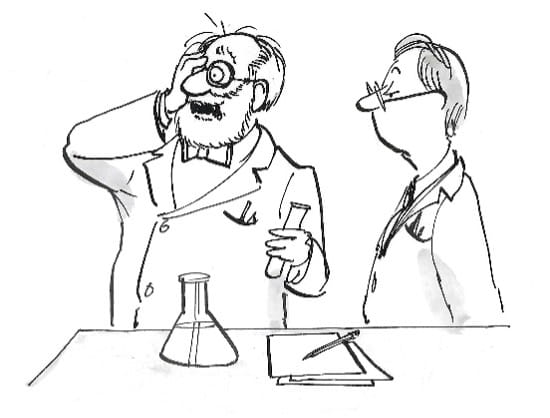
We will feature the winning caption, chosen by the Pri-Med team, in the next issue of Morning Report. Oh, and we’ll also send the winner a $50 Amazon gift card!* We know we have some creative readers, so give it a go! *Restrictions apply; see www.amazon.com/gc-legal.
A Core Strategy for Knee Osteoarthritis
ORTHO OBSERVATIONS
You can never break the chain. At least, that’s increasingly the thinking in knee osteoarthritis (OA) rehabilitation, where clinicians are looking beyond the painful joint to the kinetic chain above and below it. But which direction matters more?
Trickle-down kinetics
Core and foot-ankle exercises have each shown promise in knee OA, but few trials have pitted these proximal and distal approaches head-to-head. In a randomized controlled trial, researchers assigned 100 adults with moderate knee OA to eight weeks of conventional knee exercises plus either core stability or foot-ankle strengthening three times weekly. The core group pulled decisively ahead, with clinically meaningful improvements in resting pain, symptoms, daily function, exercise, and quality of life. They also walked faster, completed about three more chair stands in 30 seconds, and climbed 11 stairs 2.4 seconds faster than the foot-ankle group. In this trial, the results favored a top-down kinetic-chain approach.
Kinks in the chain
Eight weeks is hardly a lifetime in OA. The single-center trial was fully supervised, excluded patients with BMI >30 kg/m² or advanced disease, and had no longer-term follow-up. Participants and therapists knew the treatment assignments, leaving room for expectation and effort effects. And without direct biomechanical measurements, the proposed top-down mechanism remains just that—a proposal.
Key takeaways
For patients with moderate knee OA, don’t let rehab stop at the knee. Consider incorporating progressive core stability training alongside conventional knee strengthening. The findings don’t make foot-ankle exercises obsolete or establish an ideal regimen, but they support looking beyond the painful joint when assessing and treating knee OA—and, in this case, looking north. Bottom line—never break the chain. Citation: Fleetwood Mac.
For more education on osteoarthritis, check out this CME activity: Flexibility in Treatment: What Yoga Can Offer Patients with Knee Osteoarthritis
Drink More Water: More Than You Think
Special Contributor—Frank Domino, MD
Summer is winding down, but before you retire the beach cooler, keep one habit going: the water bottle. Recent data suggest we need to drink more—sadly, not wine but water.
Multiple evidence reviews find that current recommended water intake may be insufficient for optimal hydration. Chronic dehydration has been associated with chronic disease, accelerated aging, and ultimately, premature mortality.
A recent review suggests a goal of 2.5 to 3.5 liters of water per day to “keep urine dilute.” This converts to about 13 8-ounce glasses per day for men and 9 per day for women. In more useful terms, that means you need to fill your 24-ounce water bottle at LEAST 3.5 times per day. This means greater mindfulness throughout the day and situational awareness about the nearest potty no matter where you are.
Also important is what you drink from. The concern is that reusable plastic water bottle use is associated with chronic, low-level ingestion of chemicals that leach into the water. While it is unclear whether things like endocrine-disrupting chemicals (bisphenols, phthalates, etc.) cause harm at our current rate of exposure, why take a chance?
Any metal bottle is better than plastic, right? Nope. Some epoxy-lined aluminum bottles can leach more bisphenol A (BPA) than plastic (WHO KNEW?). Uncoated stainless steel-lined bottles leach no BPA and are the safest.
So, drink more water from your stainless steel-lined water bottle. And those of you my age, don’t blame me for your 2am bathroom run.
Interested in more healthcare news? Here are some other articles we don’t want you to miss:
- This doctor-recommended, viral walking routine can help preserve bone health mid-life
- Meal timing and eating window with all-cause and cardiovascular mortality and life expectancy: population-based cohort study
- Combination therapy with broadly neutralizing antibodies, antiretroviral therapy and CCR5 blockade limits viral reservoir seeding in infant macaque model of HIV
- Sugar-sweetened beverages linked to stomach cancer for the first time
- Effects of acupuncture on brain function in patients with depression
- Voluntary attention regulates acute immune responses in humans
Morning Report is written by:
- Alissa Scott, Author
- Aylin Madore, MD, MEd, Editor
- Margaret Oliverio, MD, Editor
- Ariel Reinish, MD, MEd, Editor
- Emily Ruge, Editor
Did You Enjoy This Issue of Morning Report?
Absolutely! | For the most part | Not at all
Click above, or share your feedback via email. Drop us an email at morningreport@pri-med.com to let us know how we’re doing.
Please note that the summaries in Morning Report are intended to provide clinicians with a brief overview of an article, and while we do our best to select the most salient points, we ask that you please read the full article linked in each summary for clarification before making any practice-changing decisions.
Enjoying Morning Report? Share It with Colleagues!
Is Morning Report for you? It is if you’re someone who needs quick-hitting, accurate medical news—but with some flair.
You don’t just need to know about the latest metabolism study—you also need to know how it parallels an Alanis Morissette hit. If you’re reading about acupuncture treatment, you need us to skip the needle puns and get straight to the point. We keep things simple, but when we do get into the scientific weeds, we always remind you to check for ticks.
Subscribe to receive Morning Report directly in your inbox the first Saturday of every month.