
Published October 3, 2026
Morning Report — Not Your Typical Medical Newsletter
We get it, you see a lot of medical newsletters, so hear us out. Once a month, we’ll highlight important medical news sprinkled with witty commentary, fun facts, giveaways, and more… because learning should be fun! Subscribe to receive the Morning Report directly.

Good morning, and welcome to October—the unofficial start of Big Vitamin C’s strongest fiscal quarter. The nearly $2 billion industry can trace much of its success to one man: Linus Pauling. Pauling was neither a dietitian nor an infectious disease physician, but he was a two-time Nobel Prize–winning chemist with a typewriter. His 1970 bestseller Vitamin C and the Common Cold helped convince the public that ordinary colds required extraordinary amounts of vitamin C.
Pauling recommended at least 2,300 mg daily for “optimum” health, and even more to prevent a cold. But this prescription rested on fuzzy math, four poor-quality trials, and a megadose of confirmation bias. Later trials mostly disagreed: Regular vitamin C failed to prevent colds and trimmed their duration by just 8% in adults and 14% in children. Taken after symptom onset, it had little to offer. For most healthy adults, the US RDA is 75 to 90 mg, readily obtained via food.
Pauling’s standing among scientists declined, but his supplement-aisle shelf life endures.
New ASH Guidelines Raise the Bar for Low Iron
HEM HAPPENINGS
Iron deficiency draws Eras Tour–level numbers: About 10 million US adults have it, along with 2 billion people worldwide. Yet many wait months or years for a diagnosis, thanks partly to inconsistent lab thresholds. The American Society of Hematology (ASH) aims to change that with clear, evidence-based criteria intended to spot overlooked cases.
Ferreting out ferritin values
ASH tasked a multidisciplinary panel, including a patient representative, with drawing a clearer line between adequate and depleted iron stores. The result: higher, population-specific thresholds for ferritin, the primary marker of stored iron:
- Children aged 9 months to 4 years: ferritin ≤20 ng/mL
- Adults, including menstruating and pregnant individuals: ≤30 ng/mL
- Higher-risk individuals: consider ≤50 ng/mL
- Adults with inflammation: ferritin <100 ng/mL or transferrin saturation <20% (inflammation can raise ferritin despite depleted iron stores)
Don’t bank on hemoglobin
ASH emphasizes that anemia is not a prerequisite for iron deficiency; hemoglobin can remain normal even as iron stores dwindle. Checking hemoglobin without ferritin is like judging someone’s finances by the cash in their wallet without checking their bank account. Hemoglobin may still look well-funded while other iron-dependent systems like muscle metabolism, mitochondrial energy production, and brain function are left short. Substantial fatigue, weakness, headaches, and difficulty concentrating can occur even without anemia.
Key takeaways
You don’t have to look far to find iron deficiency—roughly one in three US adults may have it, and normal hemoglobin does not rule it out. ASH advises checking ferritin and adding fasting TSAT when inflammation skews ferritin levels. These new thresholds should surface cases older cutoffs missed. As for treatment guidance, it’s currently a patchwork: AGA for adult iron-deficiency anemia and AAP, ACOG, or KDIGO for population-specific care. In 2027, ASH expects to release treatment guidelines that may help stitch it together.
For more education on iron deficiency, check out this CME podcast: “I Am Tired!” How Common Is Iron Deficiency in Women?
And the Winner Is…
Thank you all for posting your cartoon caption contest ideas. We were impressed! It was a tough call, but the Pri-Med team agreed that the following caption gave us the heartiest chuckle.
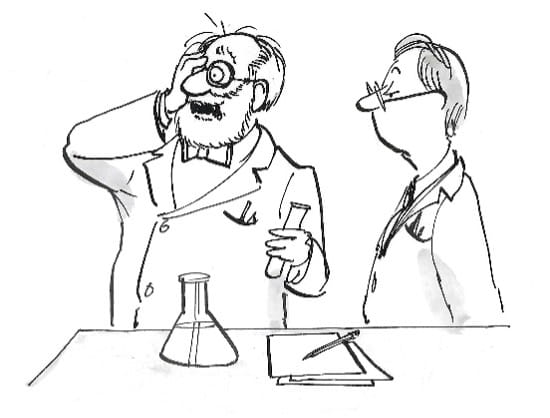
“When the lab results come back and you suddenly remember you’re the one who ordered the test.”
Congratulations to Evelyn Ferrer, PA-C, Bixby, OK, for penning this excellent caption! Check out future issues of Morning Report for more cartoon caption contests.
When the Side Effect Gets a Prescription
POLYPHARMACY POINTS
Sing along: “There was an old lady who swallowed a fly.” She then swallowed a spider to catch the fly, a bird to catch the spider, and so on. The treatment algorithm escalated quickly. Healthcare has a similar version: A potentially inappropriate prescribing cascade (PIPC)—one drug causes a side effect that is mistaken for a new condition, prompting a second drug.
One thing led to another
In a study published in The BMJ, researchers sought to identify high-priority PIPCs by analyzing prescriptions from >2 million community-dwelling Ontarians aged ≥66. They assessed 65 expert-identified drug pairs for (1) common first-drug use, (2) frequent addition of the second within a year, and (3) that sequence occurring more often than the reverse. Of the 24 pairings that met all three criteria, these occurred most frequently among new users of the first drug:
Iron supplement → laxative (11.9%)
Statin → pain reliever (10.9%)
Cholinesterase inhibitor → sleep medication (10.3%)
But …
The records showed that one drug followed another, but not why, and some pairings may have been entirely appropriate. The analysis also left out younger adults, over-the-counter drugs, and medication chains longer than two links.
Key takeaways
Before giving a new symptom its own prescription, consider whether an earlier drug introduced it. Clinicians can interrupt the cascade by reconstructing the medication timeline: what started when, why, and what changed afterward. Then revisit the original drug—can the dose be lowered, the medication swapped, or safely stopped? It’s a reminder to step back and review the full picture with the patient. In nursery-rhyme terms, before prescribing the spider, take another look at the fly.
For more education on polypharmacy, check out this CME activity: New Complaint? Wait! Could It Be a Medication Side Effect?
A Change of Shot, A Change of Heart?
CARDIO CORNER
In 2018, the United States swapped out its shingles vaccine almost overnight. Live attenuated (Zostavax) out, recombinant (Shingrix) in. That rapid switch gave epidemiologists something close to a free experiment, and an Oxford team opened a spreadsheet. Their new analysis found the two vaccine eras parted ways on cardiovascular outcomes.
Two vaccines walk into a study
The team used electronic health records to match 36,460 adults aged 60 and up vaccinated during the 2017 Zostavax window with 36,460 vaccinated during the 2018 Shingrix window, then tracked cardiovascular diagnoses for up to seven years. The researchers measured cardiovascular burden as the time between a patient’s first recorded diagnosis and the end of the study’s follow-up period. An earlier diagnosis, therefore, counted more than a later one. By this measure, the Shingrix-era group had 9% less burden from ischemic heart disease, heart failure, or ischemic stroke combined; the figures were 10% for ischemic heart disease and 12% for heart failure. Those percentages describe time lost within the study window, not the proportion of patients who avoided a diagnosis.
The confounder in the room
Both groups chose vaccination, so that helps curb healthy-vaccinee bias. But the 2017 and 2018 groups may still have differed in health habits or access to care. And with no unvaccinated group, the study can’t tell us whether either shot beats no shot on heart health. Nor can it establish that Shingrix protects the heart; that will take a clinical trial.
Key takeaways
Prescribe exactly as you did last week: two Shingrix doses for adults 50 and up and for adults 19 and up who are or will be immunocompromised because of disease or therapy. For the patient who asks about possible benefits beyond avoiding shingles, you can say the newer vaccine was associated with better cardiovascular outcomes than the older vaccine in this study. What you can’t yet say is that it protects the heart.
For more education on vaccines and cardio protection, check out this CME activity: Vaccination as Cardiovascular Risk Reduction
Interested in more healthcare news? Here are some other articles we don’t want you to miss:
- Combinations of stepping intensity and daily step counts against all-cause and cardiovascular disease mortality: Insights from a device-based prospective study
- Loss of vesicular monoamine transporter 2 in striatum of long COVID and relationship to neuropsychiatric symptoms
- Hormone replacement therapy and dementia risk among postmenopausal women: Identifying responsive subgroups in the UK Biobank
- Study: New biological clues behind coffee’s benefit to liver health
- Bisphosphonates and the risk of dementia in patients with osteoporosis or fragility fracture: A population-based study in Hong Kong
- New mRNA flu vaccine approved for adults 50 and older
- Immunization to prevent RSV in infants reduced ICU admissions by 97 per cent
- Association between timing of statin treatment after diabetes diagnosis and risk of dementia: A nationwide observational study
- Oral anticoagulants, cognition, and clinical outcomes in atrial fibrillation and Alzheimer’s disease: A Swedish nationwide study
Morning Report is written by:
- Alissa Scott, Author
- Aylin Madore, MD, MEd, Editor
- Margaret Oliverio, MD, Editor
- Ariel Reinish, MD, MEd, Editor
- Emily Ruge, Editor
Did You Enjoy This Issue of Morning Report?
Absolutely! | For the most part | Not at all
Click above, or share your feedback via email. Drop us an email at morningreport@pri-med.com to let us know how we’re doing.
Please note that the summaries in Morning Report are intended to provide clinicians with a brief overview of an article, and while we do our best to select the most salient points, we ask that you please read the full article linked in each summary for clarification before making any practice-changing decisions.
Enjoying Morning Report? Share It with Colleagues!
Is Morning Report for you? It is if you’re someone who needs quick-hitting, accurate medical news—but with some flair.
You don’t just need to know about the latest metabolism study—you also need to know how it parallels an Alanis Morissette hit. If you’re reading about acupuncture treatment, you need us to skip the needle puns and get straight to the point. We keep things simple, but when we do get into the scientific weeds, we always remind you to check for ticks.
Subscribe to receive Morning Report directly in your inbox every three weeks.